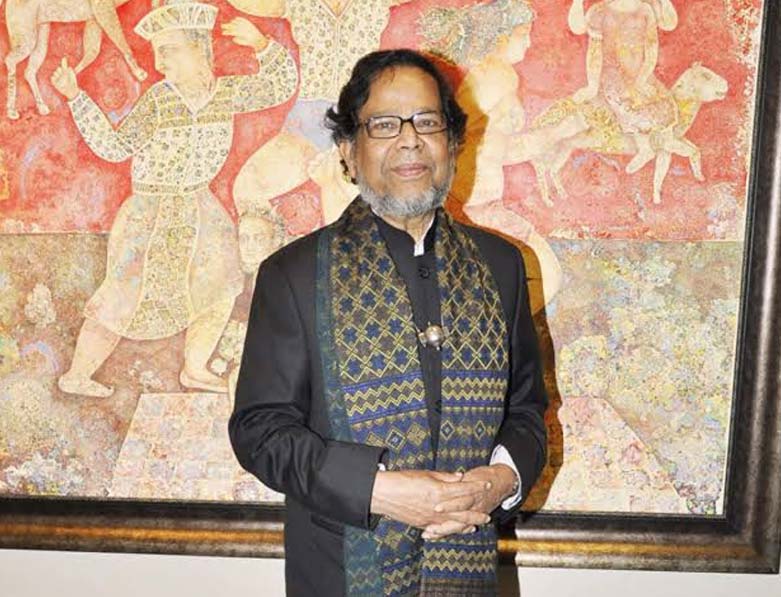
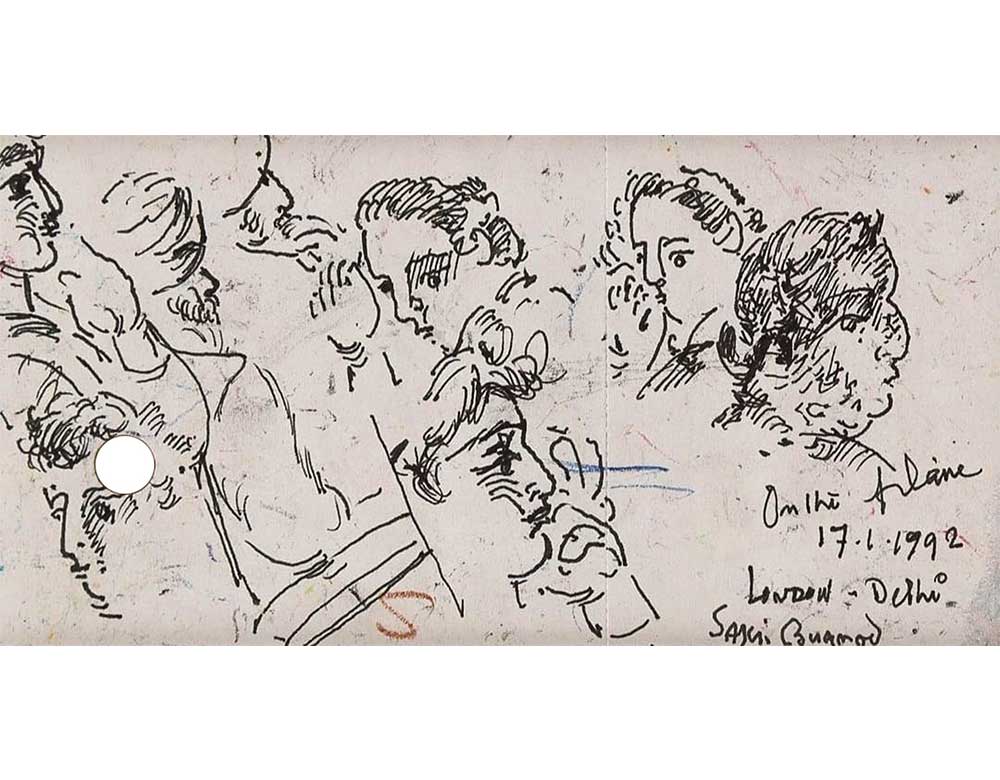
Like most other Indian artists who studied or lived in the French capital, Paris-based Burman’s works blend European and Indian imagery.
Born in Calcutta, Sakti Burman studied at the city’s Government College of Arts and Crafts, and later at École Nationale des Beaux-Arts, Paris.
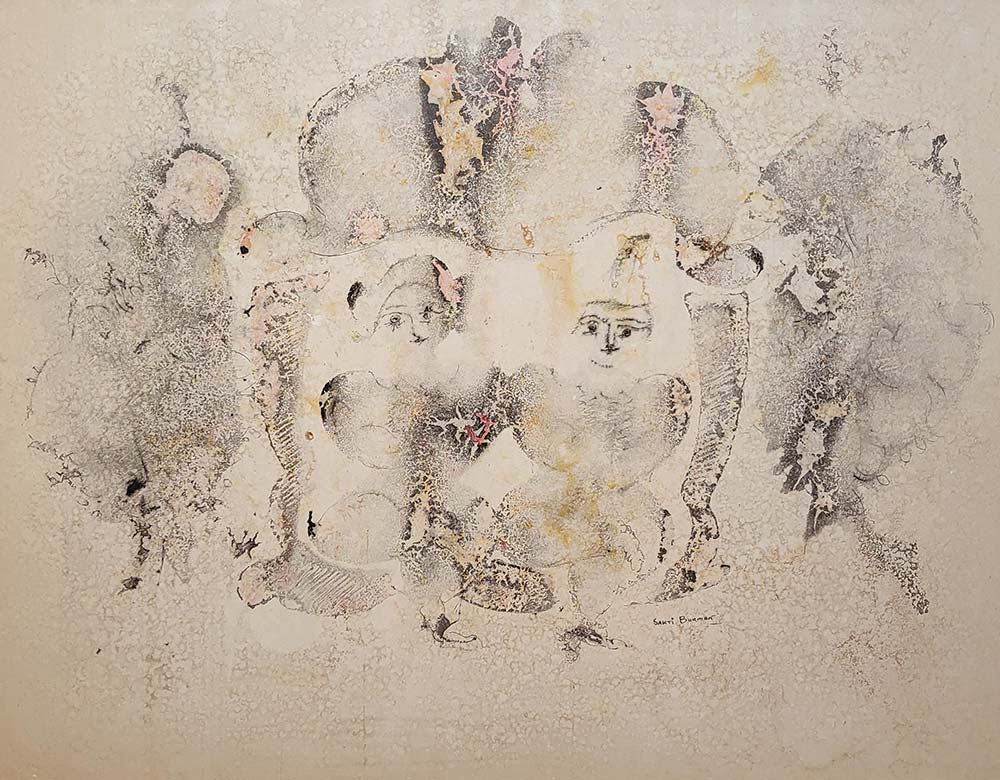
Pointillism and a marbling effect are unique characteristics of Burman’s art. He discovered marbling accidentally when water spilled on an oil canvas caused a filigreed dispersal of oil, an effect he has been painstakingly recreating ever since. Incredibly, he brought the same effect to his prints, made in his initial years, achieving the marbling on the surface of the medium — stone or wood or metal — through a labourious technical process in close collaboration with his printmakers, incidentally, also employed by Pablo Picasso and Marc Chagall. In 1958, exposure to Italian Renaissance frescos by Giotto, Piero della Francesca and Simone Martini inspired Burman to incorporate the monumentality and texture of their works in his oeuvre.
India continues to inhabit his work in the form of characters and episodes from mythology or popular culture, often alluding to Ajanta cave paintings. Birds and animals, dream imagery and mythological figures such as Shiva’s son Kartikeya, referenced as the peacock-riding man, are frequent occurrences, making his work appear surrealist. For a long time now, he has foregrounded the figurative, which had receded from the art scenario in recent decades.
Burman is married to French artist Maite Deiteil and spends his time between his homes and studios in Paris and New Delhi.