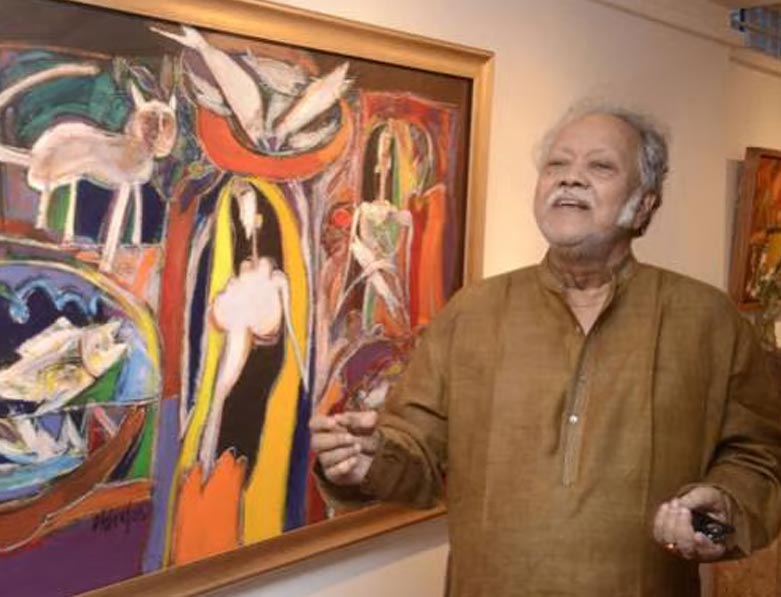
Dhiraj Choudhary makes no bones about the fact that he is a politically and socially motivated artist. He says, “For me, art is not merely an exercise in aesthetics or technical expertise. That is the reason I have never felt the need to pursue `art for art`s sake`. The better part of my creative forces, therefore, has been utilized in portraying the ills of our society, and in doing so, the hungry, the deprived, the tortured, the wounded have invariably crept into my works. The pictures I paint may not be pretty, but they are an expression of my love for humanity and my genuine concern for the world at large. My art is not a pleasure trip. It is the battlefield of my 50-year struggle for freedom, which is still going on!” Born in 1936, in what is now Bangladesh, Dhiraj Choudhary lived through the freedom struggle, but doesn`t believe it is over. There are still promises waiting to be fulfilled and goals waiting to be reached. He also believes that everyday it is a struggle for an artist to rise above their low status.
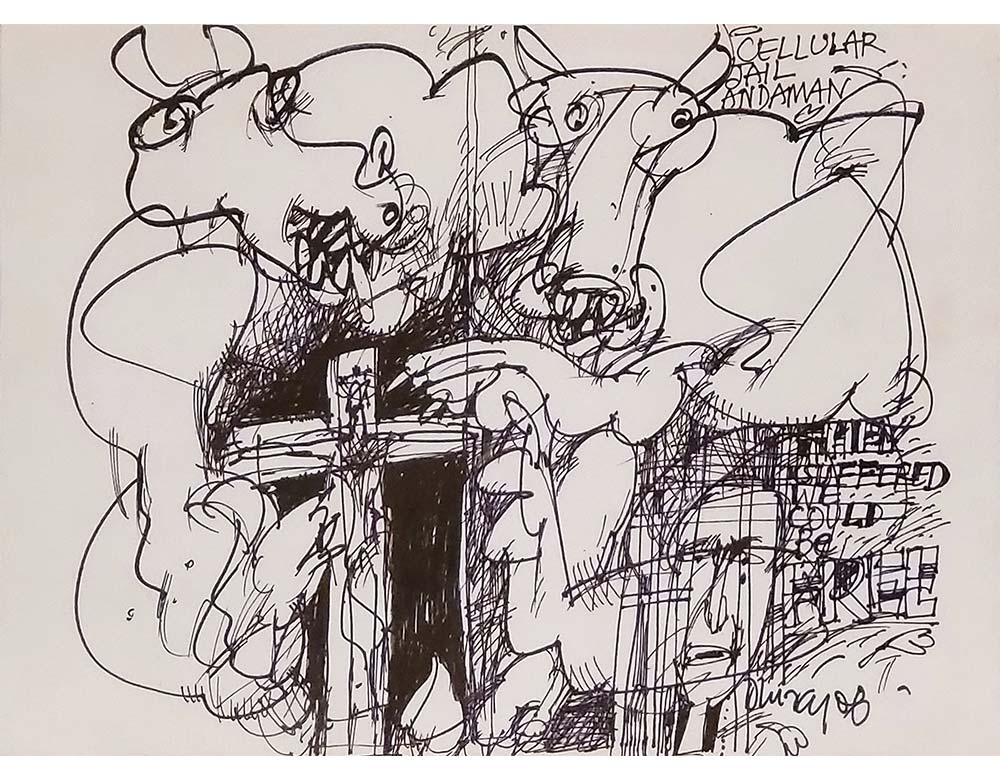
Initially in the 1960s, Choudhary made the condition of the downtrodden and displaced the focus of his work. Whether it is the famine-stricken peasants of Bengal crying out for some food, the miserable farmers of the South gathering the harvest in other`s fields, a murdered agitator lying on a Mumbai street, drifters or prostitutes, Dhiraj lends them an extremely ironical air. They are all the allegedly free citizens of a country that was supposed to awake to freedom but didn`t. Some of his pen and ink drawings from the 70`s and 80`s are absolutely frightening, reflecting his own intense reaction to witnessing the horrors of Indian society. There are beggars fighting with animals on the road over scraps of food. There are scenes of a feast, where the affluent are dicing and popping morsels of the poor into their insatiable mouths. This metamorphosed into his disenchantment fuelled Banalata series of the 90`s, where Choudhary painted the character from Jibananda Das` famous poem, `Banalata Sen of Nattore.`
In 1999, with an absolute turn of perspective, Chowdhury has endeavored to center our attention on the theme of Love – something he believes can eradicate the violence and greed we face everyday. He has thoroughly explored the concept and emotion of Love, including its dark side from which arrogance, envy and resentment are born. His sentiment and objective remain unaltered though – “Art, I believe, can play an active role in creating social awareness and I would, in my own small way, try to light a candle in the darkness of ignorance and greed.”
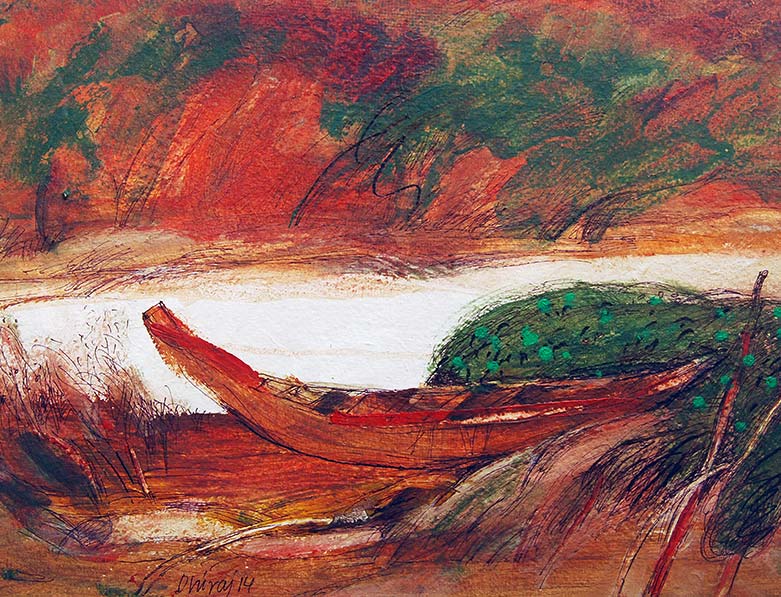
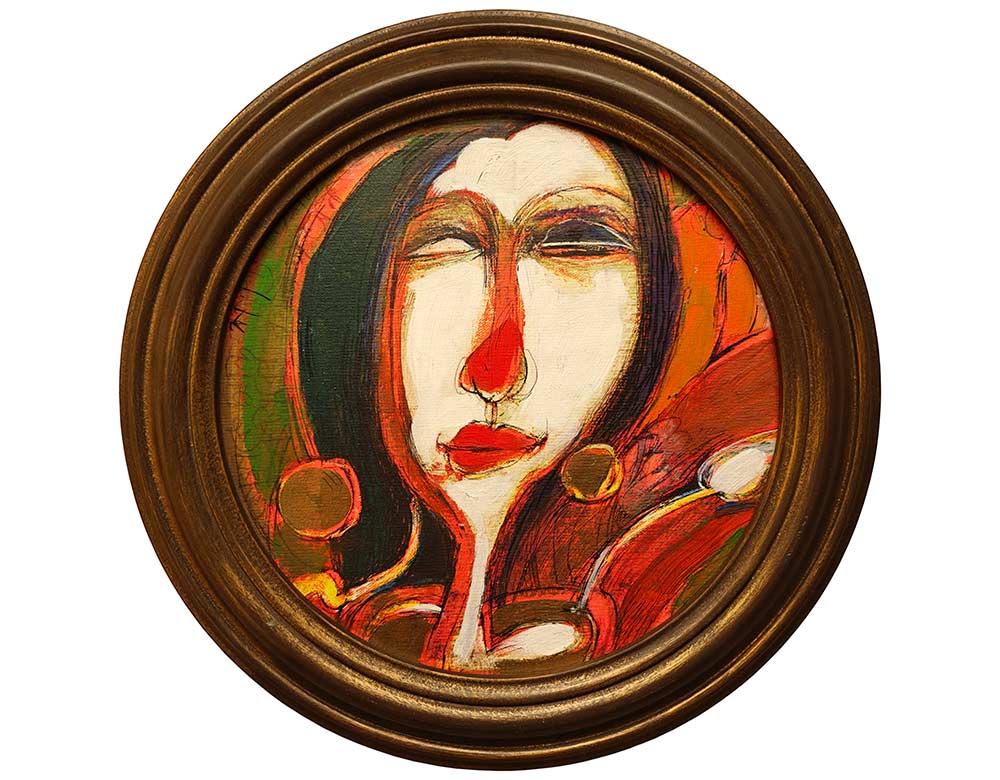
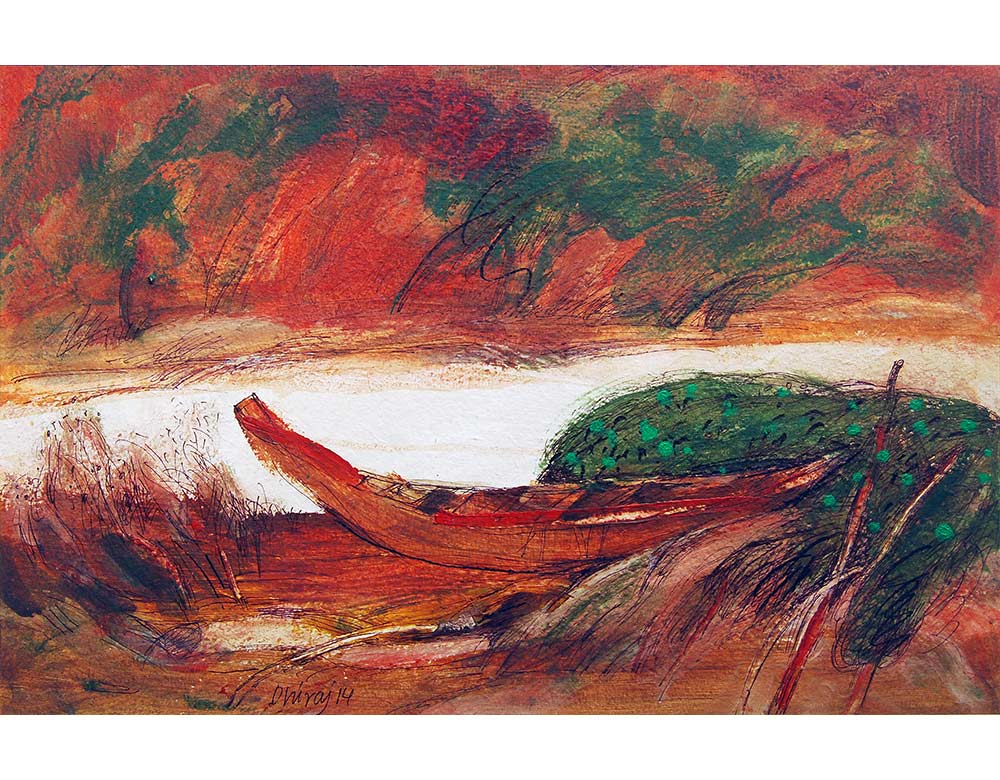
In his later works the crucial medium is acrylic paint used on canvas. He has used all the primary colors with small tints of wash, which makes the painting come alive with vibrancy. Since his forte is drawing, we also see strong and bold lines that cut the figures and forms from the background. In this series Choudhary`s subjects are simple and communicative. He uses the images of man and woman, mother and child, clowns or natural images like flowers, foliage, animals, birds and butterflies. In 2001, Dhiraj was invited to Hertfordshire, UK to curate an exhibition and conduct art workshops on the theme `Love`. He is currently teaching at the Delhi College of Art, part of Delhi University.