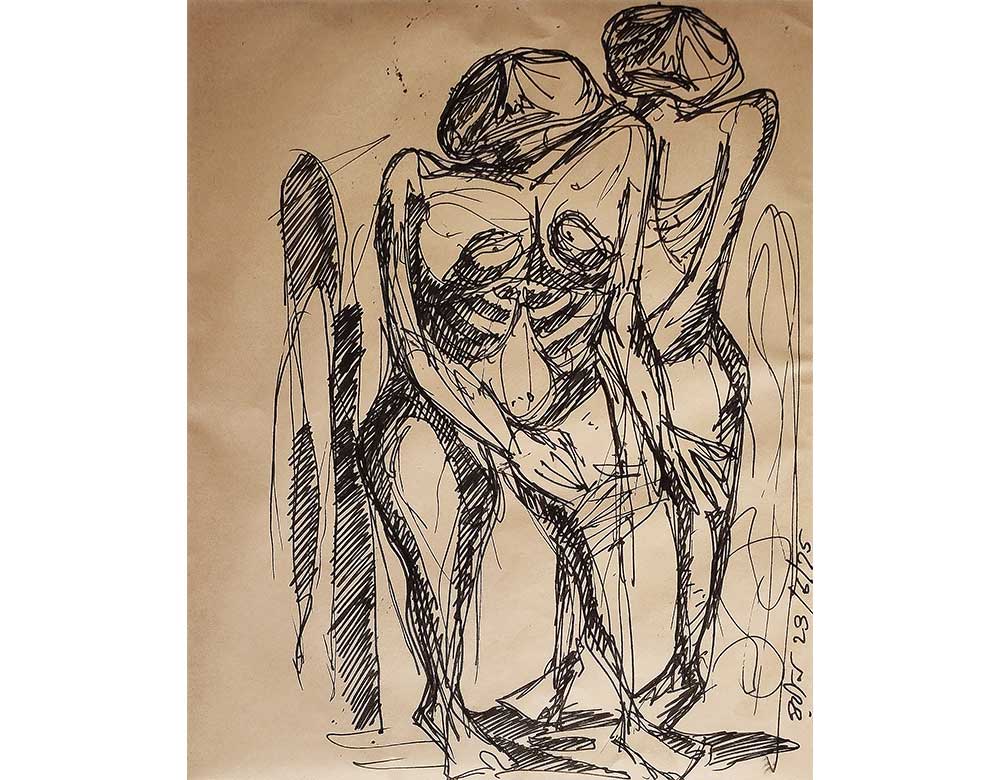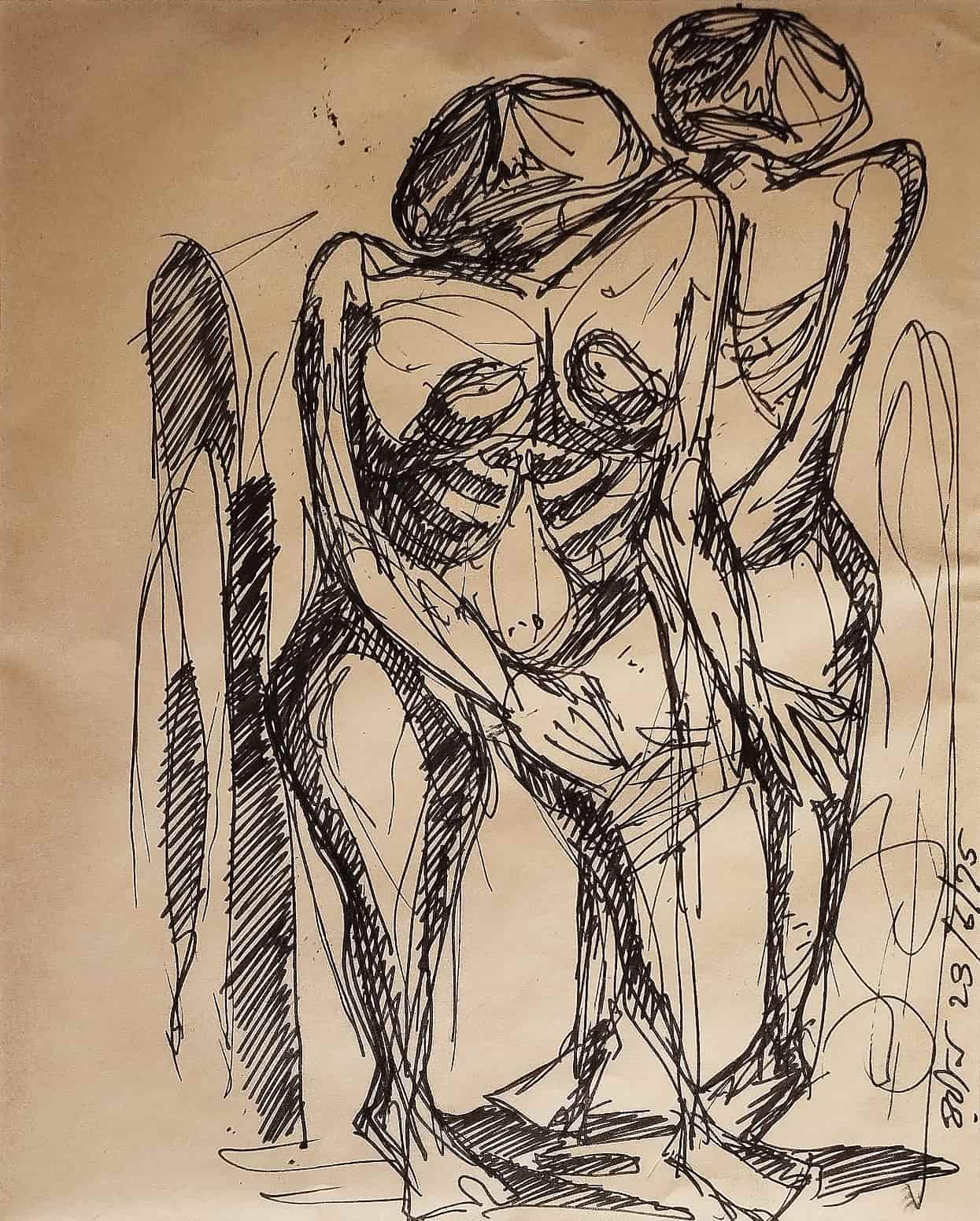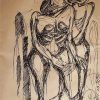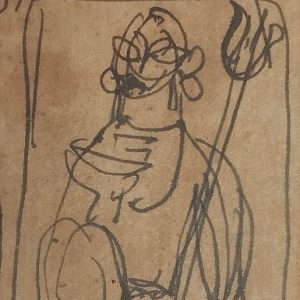
Rabin Mondal | Untitled | Ink on Paper | 10.3 x 13.4 inches | 1996
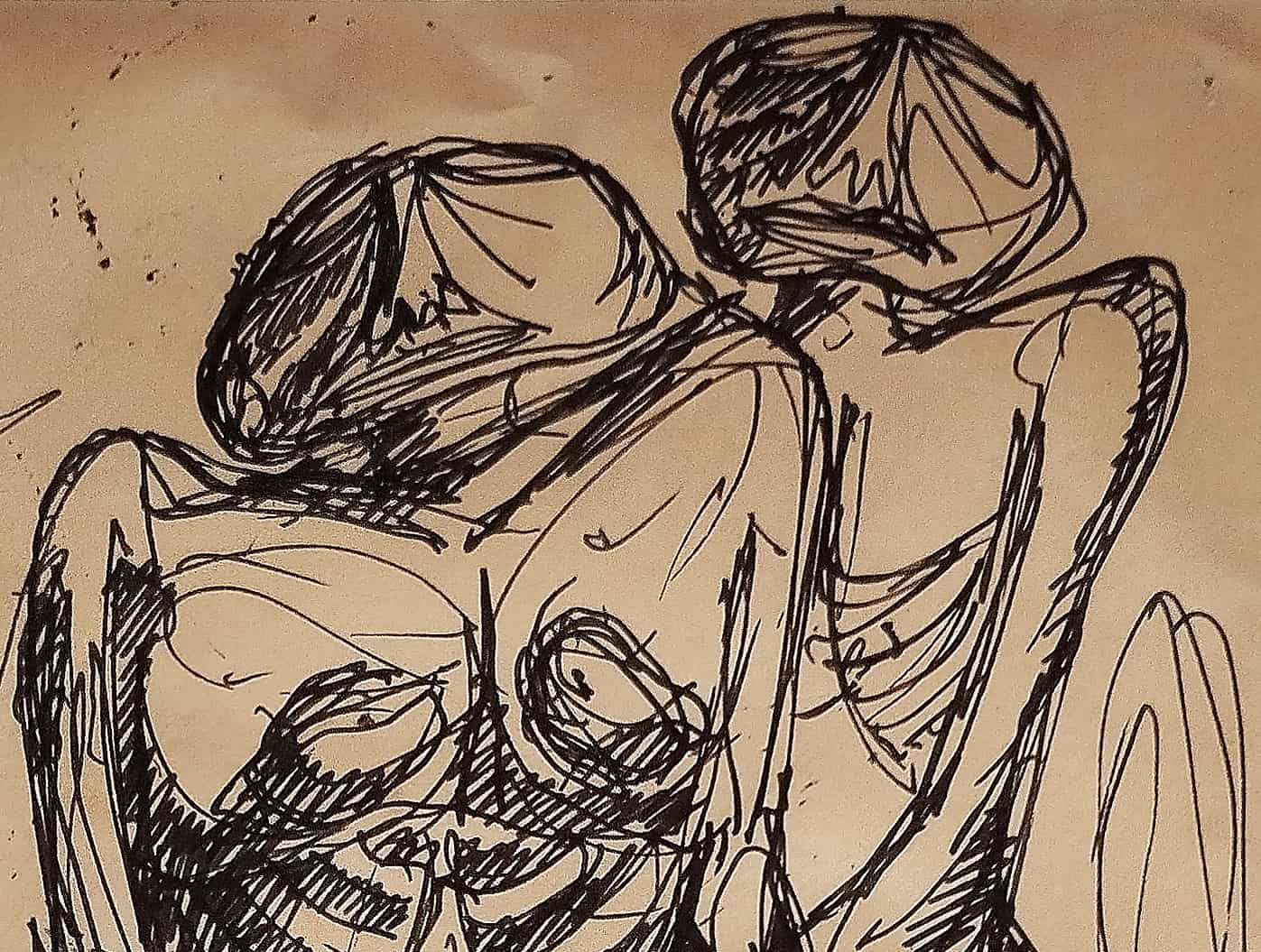
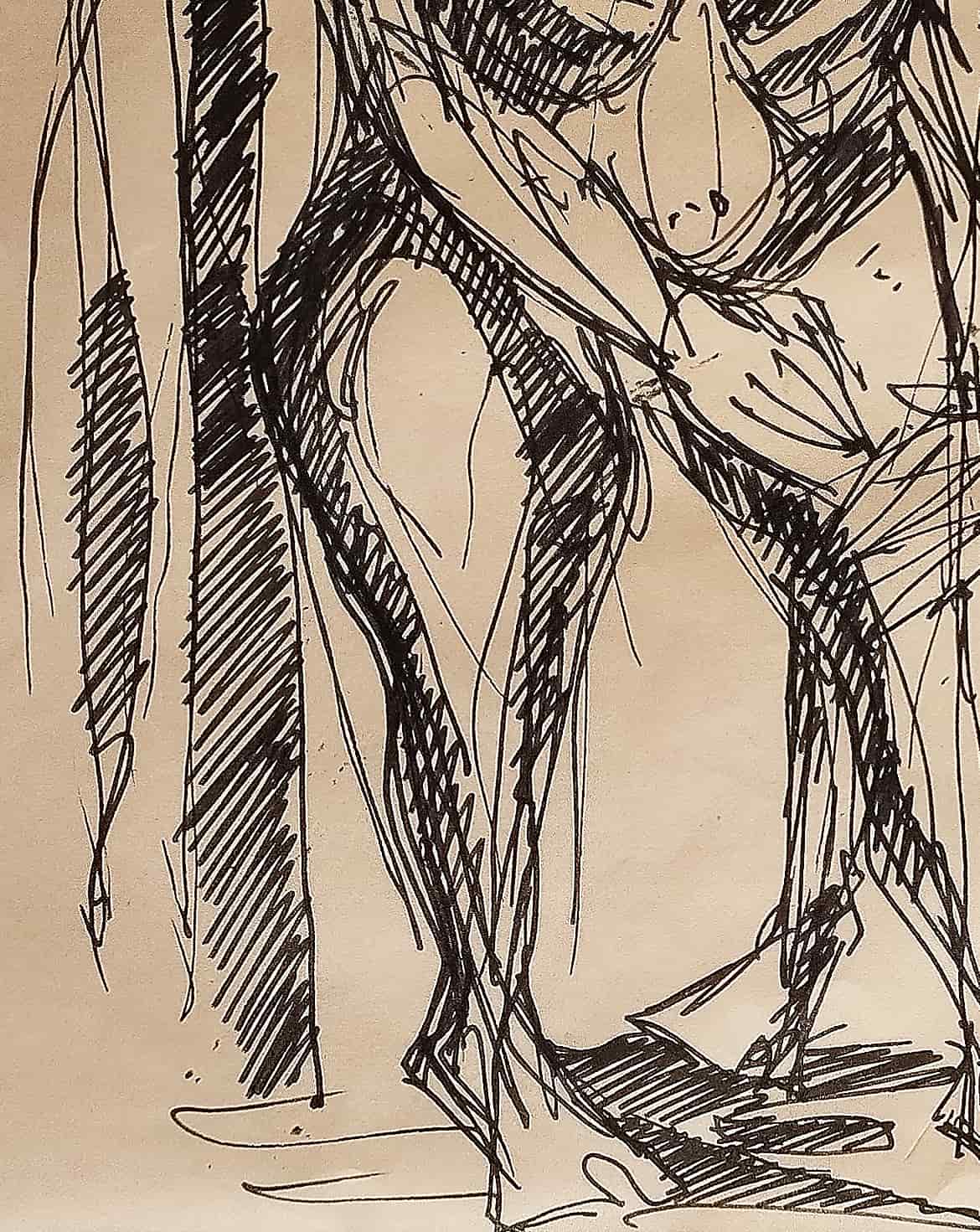
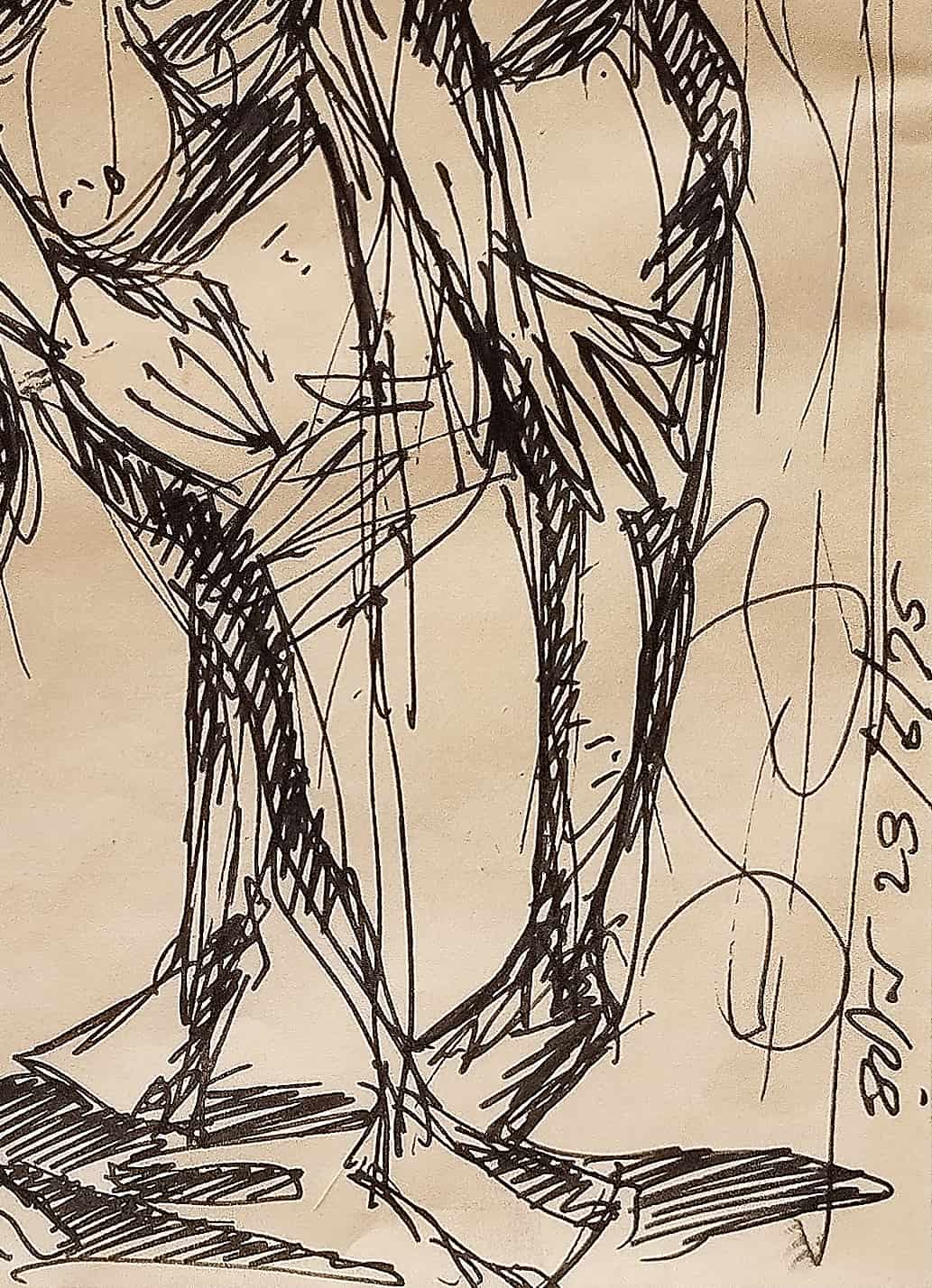
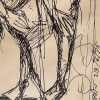
This powerful ink drawing by Rabin Mondal, created in 1996, exemplifies his expressionist approach to the human figure. Executed in raw, almost frantic black lines on paper, the work portrays two contorted, skeletal-like nude figures seated in a posture of fatigue, vulnerability, or despair. The figures, stripped of identity and reduced to exposed anatomy, resonate with themes of suffering, marginalization, and existential anxiety—central motifs in Mondal’s body of work. Their hollow eyes, angular limbs, and slumped shoulders evoke a disturbing quietude, highlighting the emotional and psychological toll of oppression. The background is left deliberately sparse, allowing the figures to dominate the composition and confront the viewer directly. This drawing, though minimal in material, is monumental in emotional weight, capturing the haunting intensity for which Rabin Mondal is widely recognized.
 Rabin Mondal was inspired by primitive and tribal art, its potent simplifications and raw energy.
If you’d prefer the artwork to arrive ready to hang, please get in touch with us to arrange framing and shipping at applicable charges.
Please note: Customs duties and import taxes may apply at your destination in accordance with your country’s regulations. Refer to our International Shipment document for guidance and support.
| Medium | |
|---|---|
| Height | |
| Width | |
| Surface | |
| Style |